Plan · Aesthetary Original
Design the visitor's path to an honest next step
You'll be able to map what a visitor needs to know, in order, and lead them honestly to a next step the business can keep.
In this skill
Start from who arrives, and what they need before they act.
- "Only 2 slots left!" always
- A countdown that resets
- Fees added at the last step
- A button hiding what follows
- Real availability, or none
- A deadline only if real
- What's included, up front
- A button that says what's next
Answer questions in order, put proof at each doubt, offer a step the business can keep.
1 more scene is in the video and the transcript.
Transcript
When a page doesn't get inquiries, people redesign the button. The visitor usually left three questions earlier, wanting to know something the page never said. Design the path first. The button is the last step on it. Here's the bakery's path in this course, walked on a phone. Home, then Today's bread, then Order ahead. Place order is the last step, and the page after it says exactly when to collect.
Every visitor arrives from somewhere, with something already in their head. Someone who searched has a problem and no trust in you yet. Someone a friend sent already trusts you and mostly wants to know how to book, so their path is short: a line of reassurance, then the booking. Write down who arrives, and from where, before you plan a single section.
Here's a fictional moving company: two brothers, three vans. Take one visitor. She's renting, moving in three weeks, and found them through a search. Write her questions in the order she'll ask them. Do you cover my area, on my date? Roughly what will this cost? Will my things be safe? And then, how do I go ahead? The order matters. A page that answers the last question first is asking her to commit before she knows they can even do the job.
Next, mark where she hesitates. Price is one: she's worried the quote will grow on the day. Safety is the other. Proof belongs at exactly those points. Next to the price question goes how the brothers quote, a fixed price after a video survey, and what that price includes. Next to safety goes their actual insurance coverage, in their policy's words, once they've supplied it. A row of logos at the bottom of the page answers neither question.
Now the action itself. The legitimate next step is the one the business can actually deliver, described as what really happens. The brothers can't price a move from a form, because every house is different. So 'Get an instant quote' would be a lie with a button on it. What they can do is a fifteen-minute video call: they look at the rooms, then send a fixed price. That's the next step, and the button says so: Book a free video survey.
This is where persuasion tips into manipulation, and the line is clearer than people like to admit. A false 'only two slots left'. A countdown on an offer that isn't really ending. Fees that turn up only at the final step. The US Federal Trade Commission's 2022 report on dark patterns describes all three. Honest persuasion uses the same moments with true content. The bakery's pages in this course do it. Show real availability or none at all. Show a deadline only when there is one. Put what's included up front. Usually that's also what removes the hesitation you marked.
When the page is drafted, walk the path as her, on a phone. Can she tell whether they cover her area and date without scrolling? Is the proof still next to each doubt, or did it drift to the bottom during layout? Did the brothers give a source for every claim they supplied? And when she presses the button, does what happens match what it said? If 'book a free video survey' opens a long form asking for her whole inventory, the button lied. More politely, but it lied. You're done when the button's words say exactly what happens next.
Then have the AI read the draft as a visitor. Give it the persona, ask for her questions in order, and put its list next to yours. It has never met a real renter, so anything it raises is a prompt to check with the client, never research.
Answer the visitor's questions in the order they have them, put proof where they doubt, and offer only a next step the business can keep.
Next 6
Everything in Plan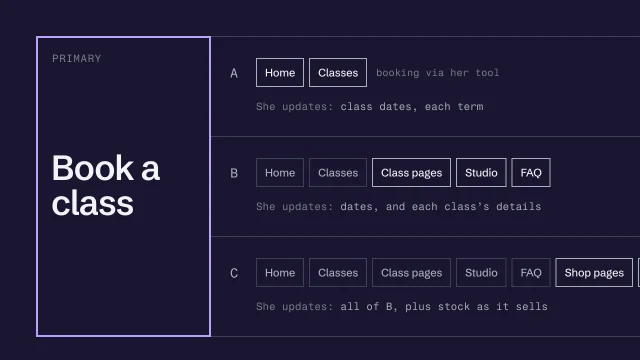 Decide what the site is for, and how much to buildName the site's one action and offer scopes the client can choose between.4 min video
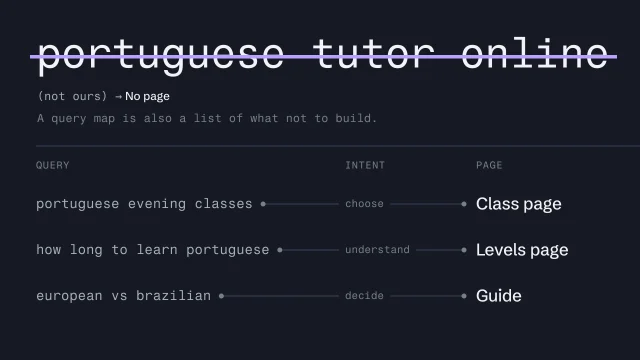 Let search intent shape the siteTurn what people search for into the pages a site needs.4 min video
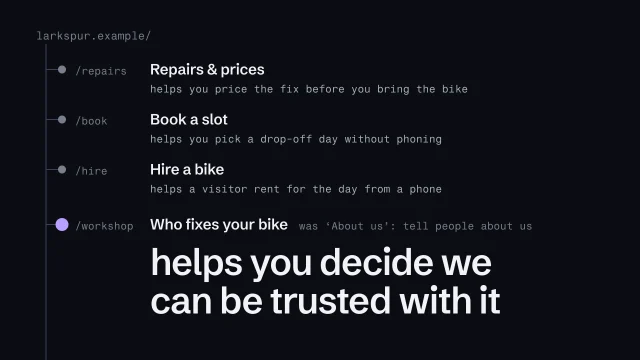 Build a sitemap where every page has one jobOrganize a site so each page has a clear purpose and a name visitors understand.4 min video
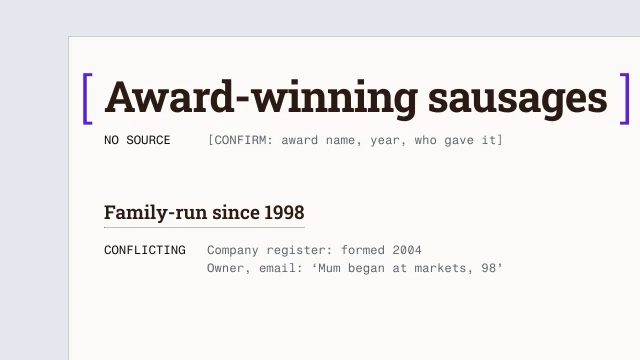 Map every claim to its sourceGive every claim on a site a truth status and a source before it's published.3 min video
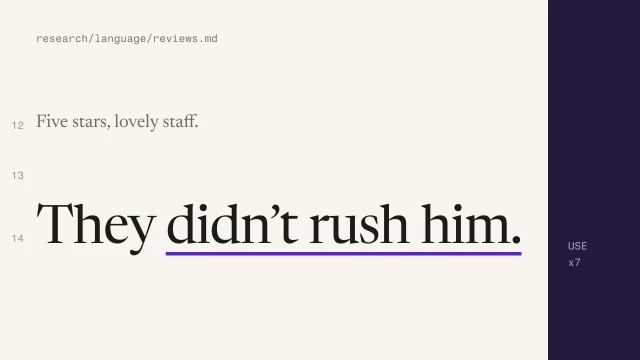 Mine customer language from reviewsFind the words customers actually use, and keep them.3 min video
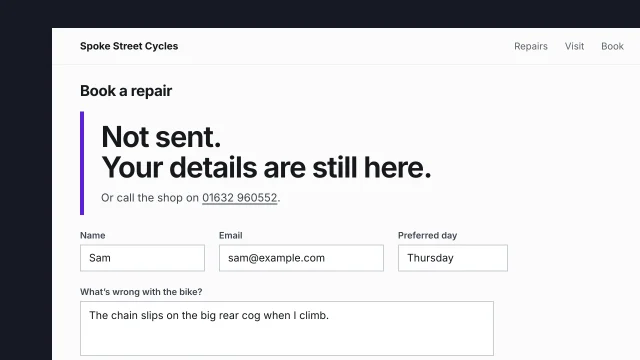 Design forms for when things go wrongDesign a form that tells the truth when it fails.3 min video