Plan · Aesthetary Original
Decide what the site is for, and how much to build
You'll be able to name a site's one primary action and offer the client scopes, in page types, that they can choose between.
In this skill
Name the one action the site exists to produce.
- "A twelve-page site"
- Priced before the content exists
- Page thirteen starts an argument
- Home, Class, Class list, Studio, Contact
- Plus how many of each
- A new class is one more instance
One primary action, scoped in page types, with the upkeep written into every option.
2 more scenes are in the video and the transcript.
Transcript
Ask a client what their website is for and you'll get a list. Book a class, buy a mug, join the newsletter, follow us. All reasonable. A page can only lead with one of them, though, and if you don't choose, the homepage chooses for you. Usually badly.
So the first decision is the primary action: the one thing a visitor does that makes the site worth having. Everything else can stay on the site. It just doesn't lead.
When it isn't obvious, I ask four things of each candidate. Does it earn or save the business money? Can the business actually deliver what happens after it? Can a visitor finish it in one visit? And would the owner notice if it stopped happening? The candidate with the most yeses usually wins. If two tie, ask the owner which one they'd miss first.
Here's a fictional ceramics studio. Priya runs evening classes and sells a few of her pieces. List what a visitor could do, and next to each, write why it matters to the business. Classes are most of her income, and every course has a fixed number of wheels to fill. Her pieces mostly sell at craft fairs. The newsletter matters, but nobody pays for it. So the primary action is booking a class. The others stay, further down, as secondary actions that don't compete for the first screen.
Next, how much to build. Don't scope in pages. 'A twelve-page site' tells nobody anything, and the term she adds a thirteenth class, it starts an argument. Scope in page types instead. A class page is one type. You design and build it once, and every course she runs is another instance of it, with the same slots filled differently. Then the real questions are which types exist, and how many instances you're writing content for. That's what the work actually costs.
Then give the client options, instead of one proposal they can only accept or reject. Three is enough. Each has to be a site you'd be happy to build and they'd be well served by. No decoy that exists only to make the middle one look sensible. That's a sales trick, and clients can smell it.
Here are Priya's. Option A is a homepage and one classes page, with booking through the tool she already uses. Option B adds a page for each class, a page about the studio, and an FAQ. Option C adds shop pages for her pieces and a newsletter sign-up. Every option leads with the same primary action. What changes is coverage, and the line underneath each one changes with it.
That line is who keeps it up to date. A site is only as accurate as the last time somebody edited it. Option C looks generous, but it means Priya updates stock on the website whenever something sells at a fair. If she won't, the shop pages are wrong within a month, and a visitor tries to buy a bowl that's gone. Write the upkeep into every option, in plain words, so she chooses the work along with the pages. Who edits, and how often, then decides the stack. That's the next skill.
Use a model as a second reader once you've drafted the options. Ask it what each option leaves out that someone booking a class would need to know. Ask what upkeep each one creates for an owner who teaches four nights a week. It's quick at that. Don't ask it to pick the primary action. It doesn't know where Priya's money comes from. You do, because you asked her.
Choose the one action the site exists for, then scope it in page types, with the upkeep written beside every option.
Next 5
Everything in Plan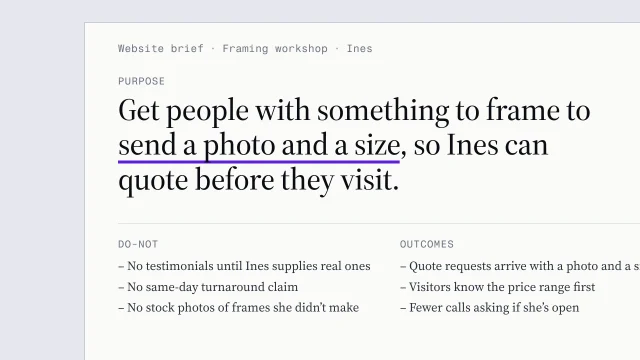 Write a one-page website briefWrite a brief that says what the site must do before anyone designs it.4 min video
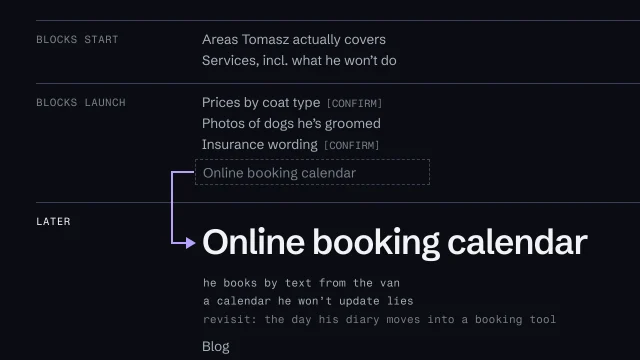 Turn wishes into requirementsSort what was asked for into what blocks the start, what blocks launch, and what waits.3 min video
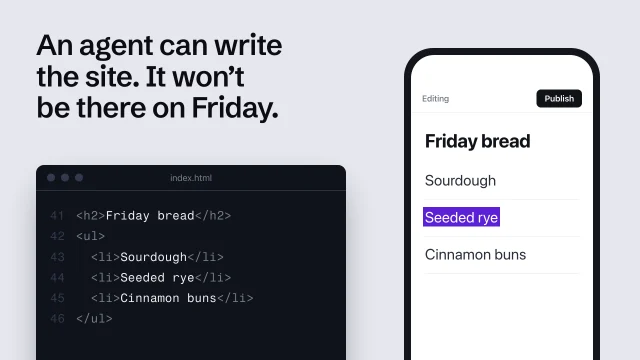 Choose a stack by who edits after launchPick the build tool from who will maintain the site.4 min video
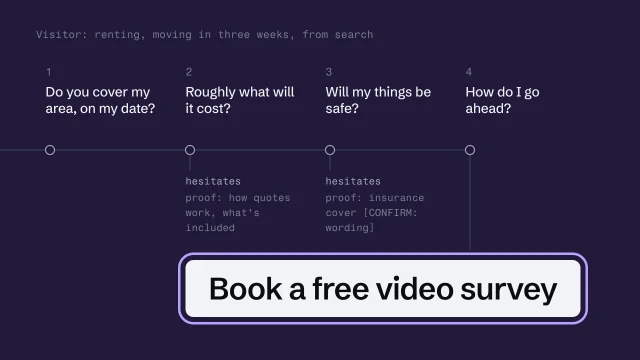 Design the visitor's path to an honest next stepUnderstand what a visitor needs, decide the legitimate next action, and design the path to it without manipulation.4 min video
 Build a sitemap where every page has one jobOrganize a site so each page has a clear purpose and a name visitors understand.4 min video