Plan · Aesthetary Original
Let search intent shape the site
You'll be able to turn what people search for into the pages a site needs, and the pages it doesn't.
In this skill
Plan pages around what searchers are trying to do.
Read the results page first
- Search it yourself, privately
- Note the kinds of result
- Read the AI answer, if any
- Write down what they wanted
Plan pages from intent. Build answers only this business can give.
1 more scene is in the video and the transcript.
The mechanics, from the source
These come from the organizations that make the tools. They teach how the tool works; the skill above is about when and why to use it.
Official resource · Google Search CentralOfficial documentation · Guide
SEO Starter GuideGuide · 18 min read
How Google Search works, site structure, writing for real searches, and what not to worry about.
Transcript
Search shows you what people want before they ever reach a site, and most sitemaps get planned without looking at it. Then someone sprinkles keywords on at the end, and the pages still don't match what people were trying to do.
Intent is what the person is trying to get done. Keywords are the words they happened to type. Two people can type nearly the same words and want different things. Two others can type completely different words and want the same thing. So you plan pages around intent, and you don't need a page for every way of phrasing it.
Before you plan anything, search the queries yourself, in a private window. Read the results for what kind of thing comes up, more than for who ranks. Here's 'sourdough near me', drawn, with made-up results. A map of nearby bakeries with their hours means people want somewhere near them, open now. 'Bakery open Sunday' brings the same map, with today's hours. That person wants one fact: is it open, and when. 'How to make sourdough' brings recipes, guides and videos. That person wants to bake it themselves. And the AI-written answer at the top already walks through the steps, so read it carefully: it shows you what a generic answer covers. 'Order bread for pickup' brings ordering pages, with times and prices. That person is ready to choose.
Here's the bakery's query map. 'Sourdough near me' and 'bakery open Sunday' are people looking for somewhere nearby: that's the Visit page, with the hours, and Today's bread. 'Order bread for pickup' is someone ready to act, and it points straight at Order ahead. 'How to make sourdough' gets no page at all. The bakery sells bread; it isn't a recipe site. A query map is also a list of what not to build.
Now the AI answer. For 'sourdough near me', the summary at the top may already name a few bakeries and tell people to check the hours. A page that repeats that adds nothing. The page worth making is the one only this bakery can write: today's bread and what's left, the sourdough ready at 7, orders closing at 6 pm the day before. Google's own page on its AI features says there are no special requirements for appearing in them. The usual fundamentals apply, and useful, specific content is one of them.
Where do the queries come from? Start with the customers' words you collected, because people search in their own words: 'I order the rye for Saturday' is a query waiting to happen. Add what callers ask the owner on the phone. Type the first few words into a search box and read what it suggests, and note the related questions the results page shows. A model can help you sort a long list by intent, but check its sorting against real results pages. I'm not giving you search volumes here. For a small local site, I'd rather answer ten real questions well than chase one big number.
Then turn the map into structure. Every intent you're keeping becomes a page type, or a section of one. Finding the shop becomes Visit. Ordering becomes Order ahead, one tap from Today's bread. Group related pages together, so the site is organized the way the questions are. That's the hand-off to the sitemap.
Titles, descriptions, readable addresses, how a site gets found and crawled: that's all in Google Search Central's SEO Starter Guide, and I'd trust it over any summary, mine included. This lesson is the part that comes before it: deciding which pages should exist at all.
Plan pages from intent. Build answers only this business can give.
Next 5
Everything in Plan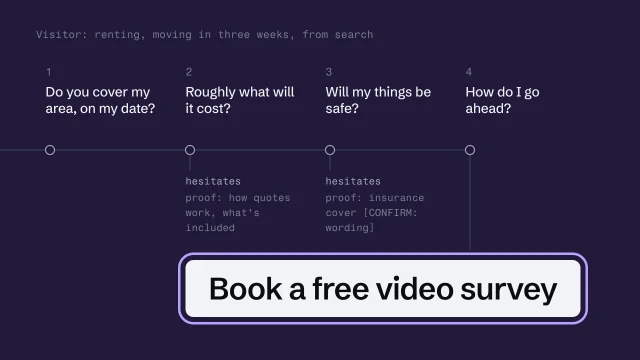 Design the visitor's path to an honest next stepUnderstand what a visitor needs, decide the legitimate next action, and design the path to it without manipulation.4 min video
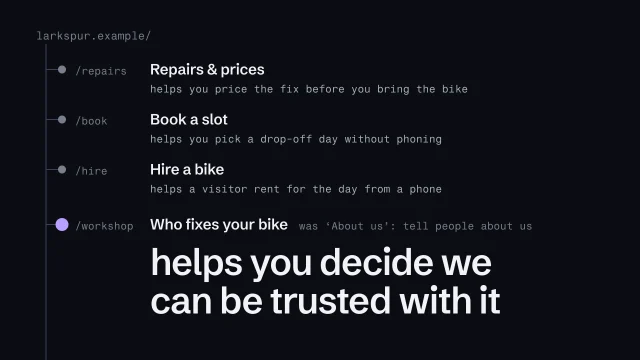 Build a sitemap where every page has one jobOrganize a site so each page has a clear purpose and a name visitors understand.4 min video
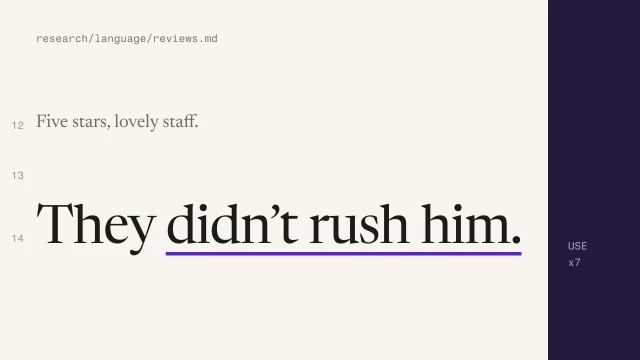 Mine customer language from reviewsFind the words customers actually use, and keep them.3 min video
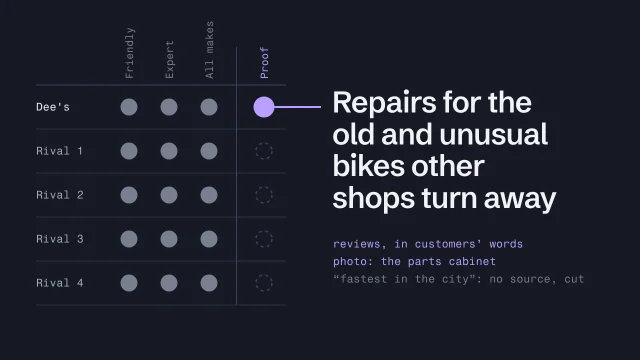 Position with proofChoose a position the business can back with evidence.3 min video
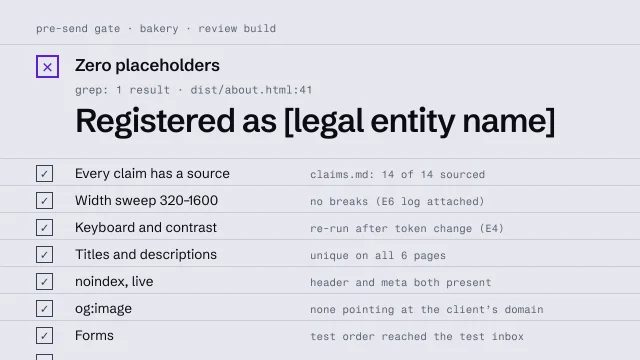 Run a pre-send gateCheck a build against a fixed list before anyone outside sees it.4 min video