Build · Aesthetary Original
Assemble the site without losing the content
You'll be able to build every page of a site from one approved homepage and check each page against its approved words.
In this skill
Get the homepage approved before you build a second page.
- Copy ‘tidied’ by the agent
- A heading nobody wrote
- Sections moved for the layout
- New spacing on each page
- Manuscript text, word for word
- Headings exactly as written
- Order as the manuscript has it
- Spacing from the scale
Approve one page, build the rest from it, then diff every page against its approved words.
1 more scene is in the video and the transcript.
Transcript
The homepage got all your attention. The other five pages got an agent and a deadline. That's where sites drift.
Build one page first and get it approved. Usually that's the homepage, because it carries the most decisions: type, spacing, components, how sections open and close, how images sit. Until you and the client have signed it off, every other page copies decisions that might still change. Once it's approved, freeze it, so nobody improves it while the rest gets built. An unapproved homepage copied across six pages means every later change gets made six times, and some of them get missed.
The approved homepage is now your reference for how this site handles things. Copy its decisions, and leave its layout where it is. In the fictional bakery, the Today's bread page lists loaves with the same list the homepage already proved. The Order ahead page needs a form, which the homepage never used, so the form gets built as a new component from its slot and held to the homepage's colors, type and spacing. Give your coding agent the homepage file and the manuscript, the approved words, every time.
Here's what drift looks like. The agent tidies a sentence because it read awkwardly. It adds a heading, Our story, because about pages usually have one. It moves a section up because the layout looked better that way. It drops in a stock photo because the page looked bare. Each change is small and each one is plausible, which is why nobody catches them. The manuscript holds the approved words. If a sentence needs changing, that goes back to whoever approved it.
Then check every page against the manuscript. By eye it's tedious and you'll miss things, so have the agent do the comparison and report back without fixing anything. Ask for added, missing and changed text, with both versions quoted, and for any spacing value that isn't in the tokens. Then you decide what to do with each one, and read the report with care. A line the agent cut because it looked repeated may have been repeated on purpose.
The last check is rhythm across the whole site. You planned each page's rhythm in the wireframes: where it's dense, where it rests, where it peaks. Assembly is where every page quietly turns into the same page. A hero, three cards, a quote, a call to action.
So lay the built pages side by side, zoomed right out, and read their shapes. Each bakery page has a different job, so each should have a different shape. The homepage leads with the queue photo, Today's bread is a list of loaves, and Visit is the address and the hours. If two pages with different jobs come out with the same silhouette, one of them is wrong. Check this every couple of pages, before one pattern sets across the site. Show the client pages in small batches, too. Three pages get read properly. A whole site at once gets a thumbs up and no reading.
Sometimes the build shows that the manuscript has a problem. A heading is too long for any sensible layout, or two pages say the same thing. Don't fix it in the HTML. Mark it, send it to whoever owns the copy, and rebuild from the corrected manuscript. Otherwise the manuscript and the site disagree, and the next agent session puts the old words back.
Approve one page properly and build the rest from it. Then check every page against its approved words, before anyone else reads it.
Next 5
Everything in Build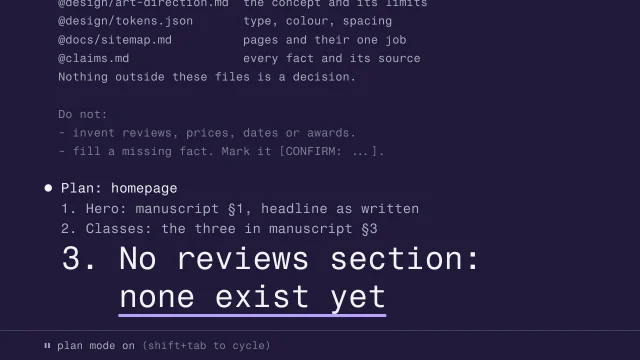 Brief an AI agent before it writes codeGive an agent everything it needs, and nothing it can misread, before it builds.4 min video
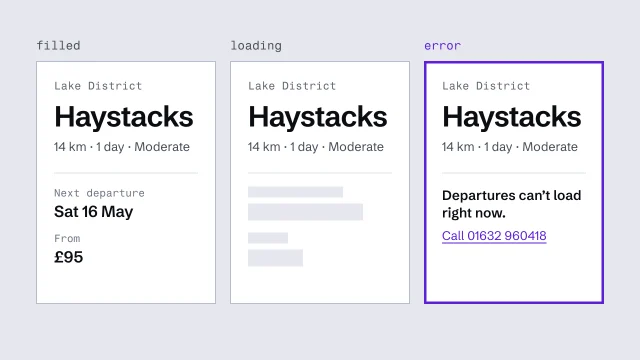 Build components from content slots, with every stateDerive components from the content model and finish every state they can be in.3 min video
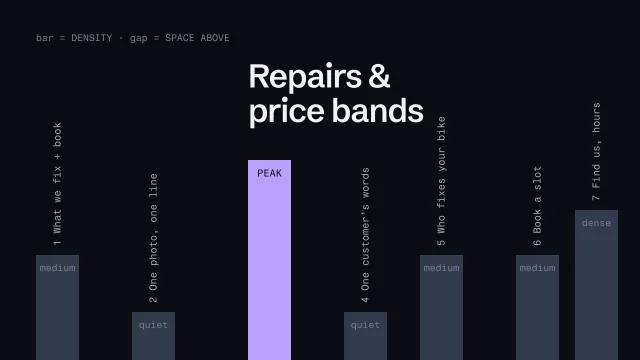 Plan section rhythm across a pageVary density and rest down a page so it builds instead of repeating.3 min video
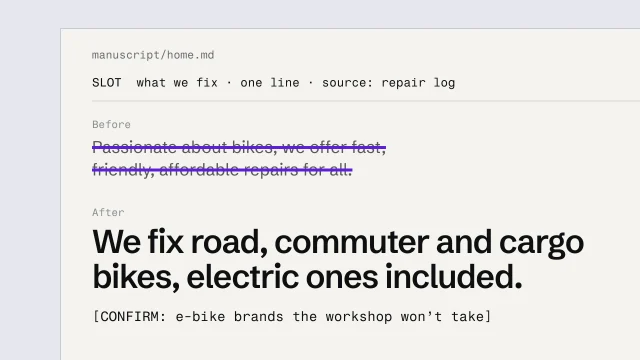 Write specific, true copy for each slotWrite copy only this business could say, and cut what sounds machine-written.4 min video
 Review the work against its briefJudge a build against what it was meant to do, not whether it looks good.4 min video