Research · Aesthetary Original
Qualify a project before you take it
You'll be able to decide go or no-go on a website project from evidence you can point to, before you spend a day on it.
In this skill
Most bad projects look fine until the second week.
- A post last week
- 'Open now' on a map listing
- Five stars at the top
- New work in a recent post
- A recent review of a visit
- A phone call someone answers
Answer each question with evidence
- Write the question
- Answer: yes, no or unsure
- Attach the evidence and its date
- Say what would change your answer
If you can't point to the evidence, you haven't qualified the project. You've hoped.
1 more scene is in the video and the transcript.
Transcript
Before you design anything for anyone, find out whether the project is real.
You spend a week on a homepage for a business that has already moved on. Or you pitch someone who can't sign anything. Both start on day one, when you say yes to a project you never checked. Qualifying is the short check that prevents it: a few questions, each answered with evidence, written down before you start.
I use four questions. First, is the business alive: trading now, at this address, answering its phone. Second, is there something to fix: a real problem the website causes or could solve, beyond 'it looks old'. Third, who is the client: the person who decides and pays, which is often not the person who emailed you. Fourth, the money test: can they pay for this, and is what you'd fix worth more to them than it costs? A no on any one of them is worth knowing now.
Sign of life is where people get fooled, because the internet keeps a business looking open long after it has stopped. Take a fictional upholsterer, Fenwick and Daughters. Their social page posted last week, but it's a chair from four years ago, the kind of repost a scheduler sends out by itself. The map listing says open now, because nobody told it otherwise. Sort the reviews by newest and the top one says the owner retired and the workshop is shut. So read what the evidence describes, and check the date on the thing itself, never the date the platform shows you.
Who the client is sounds obvious until you're three drafts in and someone new appears with opinions. Ask early and plainly: who decides, who pays, and who else has to like it. A manager who loves your idea may not be able to approve the spend. A partner who never answered your email can still veto everything. If you can't get a name for the person who decides, write 'unknown' and treat it as a risk.
The money test is really two questions. A business that could easily afford a new site but loses nothing from the current one will stall on every invoice. One that loses bookings every week to a broken inquiry form may find the money quickly. You don't need their accounts. You need a rough idea, in their own words, of what the problem costs them.
For each question, write four things. The question. Your answer, and unsure is allowed. The evidence, as a link or a file path, with the date the evidence is from. Then what would change your mind. That last line does the most work. It turns a vague worry into a task: if the phone goes unanswered twice this week, this is a no.
Here's the sheet for the upholsterer. Alive is a no, and the two lines underneath say why, with dates. Who is unknown, because the inquiry came from a relative. Fix and money were never assessed, because there was no point. The call is no-go, and it says exactly what would reopen it. If you wrote this on Monday and a colleague read it on Friday, they could check every line without asking you a thing.
Do all this before you ask the AI, for the same reason you decide first on anything else. Asked whether this is a good lead, it will happily help you talk yourself into a yes. Then let it look for evidence you missed. Keep the sheet in the project folder. When something goes wrong in month two, it's the first thing you'll want to reread.
If you can't point to the evidence, you haven't qualified the project. You've hoped.
Next 4
Everything in Research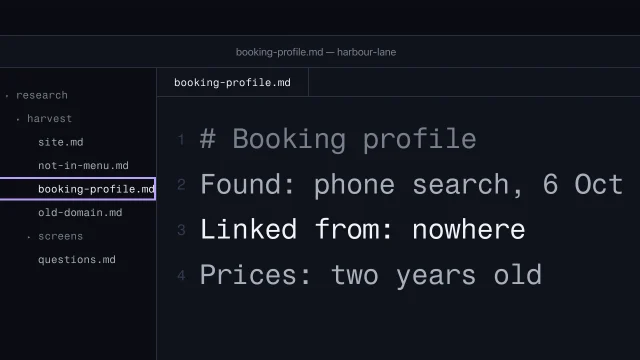 Harvest a client's whole web presence with AICollect everything a business already has online before asking them for anything.4 min video
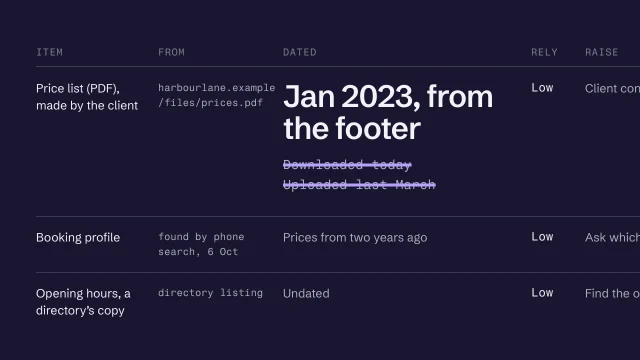 Build a source inventory you can trustTurn a harvest into an inventory where every item has a source and a date.3 min video
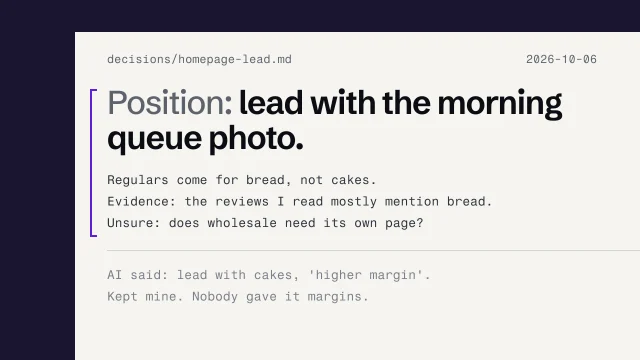 Decide first, then ask the AIPut your own answer in a file before any AI sees the question, then compare the two.3 min video
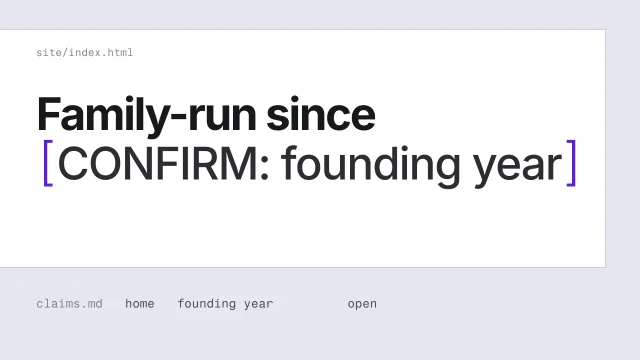 Never invent a factHandle a fact you can't confirm without putting a believable guess on the page.3 min video