Test · Aesthetary Original
The live review loop
You’ll run a review round on the live page: one pinned note per change, a frozen baseline, and a full re-sweep after each fix.
In this skill
Select the element, not the page.
The live review loop
- Pin each note to its element
- One note, one change
- Freeze the baseline
- After each round, sweep it all
- Close a note on a passing sweep
One note per change, pinned to its element. Freeze a baseline, re-sweep every round.
Transcript
Review notes in a separate document drift away from the page. A note that says fix the header and the colors leaves the builder guessing which header, at which width, and when it’s done.
So review on the live page, in a loop. Pin each note to the element it’s about, and ask for one change per note. Freeze the baseline before anything is fixed. Then, after every round of fixes, sweep the whole build again, and close a note only when that sweep passes.
Here’s the bakery’s review build on a phone, three seventy-five wide. Select the element itself: the Menu button that hides the order link. The note pins to it and records the page, the element and the width, so the builder sees exactly what you saw.
My first draft of that note also asked for the label to read Today’s bread. That’s two changes, so it becomes two notes, the second pinned to the label itself. Each one can now be fixed, checked and closed on its own. The third note goes on an allergens line, a gray that measures three point one to one on the cream background. Three notes, three pins.
Before anyone fixes anything, freeze the baseline. Check that nothing is waiting to be saved, then tag the build as it was reviewed. Then run the sweep on it: every check from the review, on every page, at four widths. Three checks fail, one for each note. Two pass, and they have to keep passing.
The builder sends round one, and at three seventy-five all three notes look fixed. Don’t stop at the notes. Sweep the whole build again, against the baseline. Three checks went from fail to pass. One went the other way: the home page and Today’s bread now have two Order ahead buttons, at every width. The note asked for the order link in the phone header. The fix put a second big button in the header at every width, and the design allows one a page. Nobody checked the desktop, because no note was about the desktop. That’s what the sweep is for.
So the regression becomes a fourth note, pinned to that button. Round two stops folding the header links behind Menu on phones, so Order ahead is a link again and the extra button is gone. Sweep again: every check passes, and nothing that passed before has failed. Only now do the four notes close, each with the date of the sweep that proved it.
One note per change, pinned to its element. Freeze a baseline, re-sweep every round.
Next 4
Everything in Test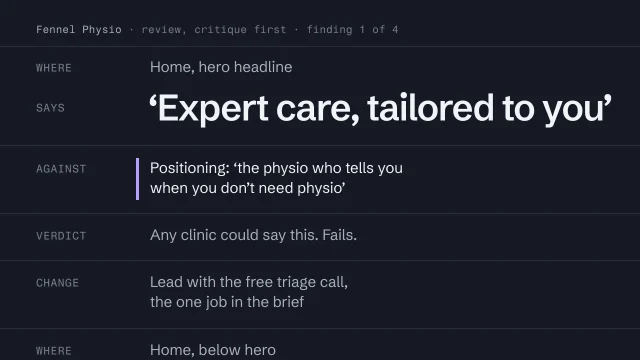 Review the work against its briefJudge a build against what it was meant to do, not whether it looks good.4 min video
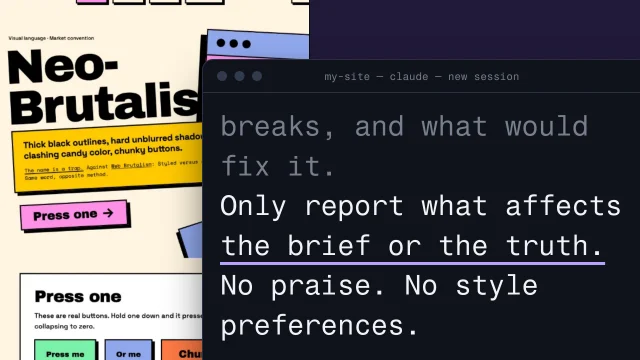 Get an honest AI reviewHave an AI review your work without it grading itself.4 min video
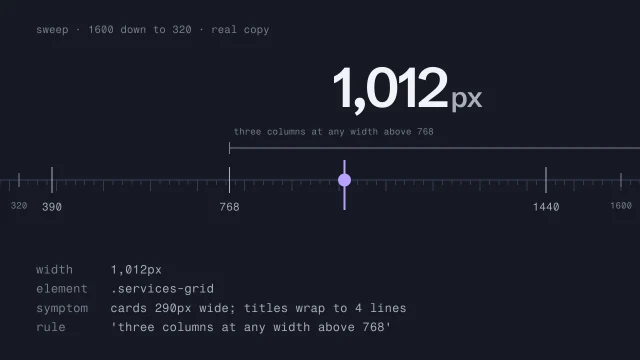 Test responsive behavior across every widthFind the exact width where a layout breaks.3 min video
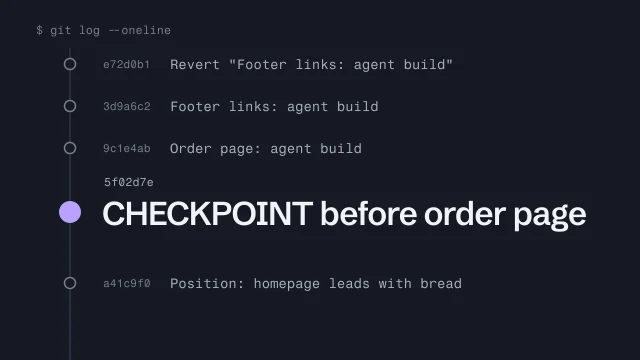 Use Git as a checkpoint before an AI agent changes your buildMake a save point before an agent touches your work, and get back to it.4 min video