Structure · Aesthetary Original
Build a content model from page types and slots
You'll be able to describe each type of page as the content slots it must hold, before anyone writes or designs it.
In this skill
Plan page types first, then the slots each type must hold.
- Hero
- Feature grid
- Testimonial carousel
- CTA banner
- The queue photo
- Today's bread
- A regular's words
- Order ahead
Design the slots before the page: what must be there and its source, never the look.
1 more scene is in the video and the transcript.
Transcript
A sitemap tells you which pages exist. It doesn't tell anyone what goes on them, and that gap is where generic pages come from.
Start by sorting the sitemap into page types. A page type is a pattern of content that repeats. The bakery's six pages come down to three types. Today's bread is a product list: one entry per loaf, the same slots every time. Order ahead is an order form. Visit, About and Contact are info pages. Thinking in types keeps scope honest. The bread list changes every morning, and six loaves written up one at a time are six chances to drift. If you started from a site blueprint, it already lists the pages and the sections on each. Treat those sections as your first draft of slots, then give each one this client's rule, source and count.
Each page type is a set of slots. A slot is a named piece of content the page has to carry. It isn't a box in a layout, and it isn't a database field yet, though it may become one. Define each slot by four things. A name that says what it carries. A rule for what it must contain. A source, meaning where the content comes from: a fact from the bread list, copy someone writes, or evidence like a photo or a review. And a count: exactly one, one or more, or allowed to be empty.
Here's one written out. Read the source column first, because that's where most of the thinking is. The price comes from the owner, and the rule says always shown, never 'ask in store'. The allergens come from the head baker, every one, for every loaf. Nobody can fill those by writing nicely. If the source doesn't exist yet, the slot stays empty, and you've found a research task for the client. Here, on the ninth of October, nobody had written down prices or allergens.
Name slots for what they carry. If your model says hero, feature grid, testimonial carousel, you've designed the page before you know what's on it, and you've picked the components everyone else picks. 'A regular's words' could end up as one quote set large, or a single line beside the order button. 'Testimonial carousel' has already decided, and it decided the average. Design decisions come later, from the content.
The count matters more than it looks. One photo or twelve is a different component. 'Optional' means the page has to look finished when that slot is empty, and someone has to design that state on purpose. When you get to building components, these counts are the specification. When you get to copy, each slot is the brief for one piece of writing, with its length and its source already set.
Before you hand the model on, test it against one real instance. Take one actual loaf, the sourdough, and fill every slot from its real source. You'll find things. On the ninth of October, the bread list had the name and the description, but no price and no allergens. Each gap is either a slot that shouldn't exist or a fact the business needs to start keeping. Here it was two questions: prices for the owner, allergens for the head baker. The content model is ready when one real loaf fills every slot. Better to find the gaps with one loaf than after the whole list is built.
This is also the most useful file you can give an AI agent. Without it, the agent fills each gap with what pages like this usually say. With it, the agent knows each slot, its source, and when to leave it empty and say so.
Design the slots before the page. A slot says what must be there and where it comes from, never what it looks like.
Next 4
Everything in Structure Build a sitemap where every page has one jobOrganize a site so each page has a clear purpose and a name visitors understand.4 min video
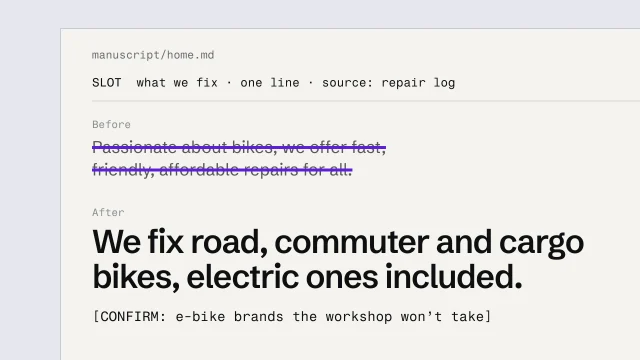 Write specific, true copy for each slotWrite copy only this business could say, and cut what sounds machine-written.4 min video
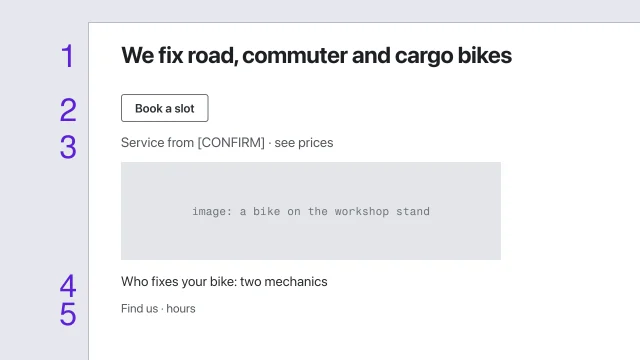 Wireframe for hierarchy before styleSolve a page's structure before any visual style is applied.3 min video
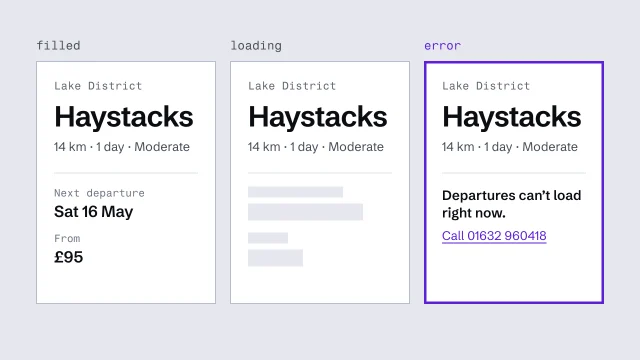 Build components from content slots, with every stateDerive components from the content model and finish every state they can be in.3 min video