Plan · Aesthetary Original
SEO, AEO and GEO: what's different and what isn't
You'll know what SEO, AEO and GEO each mean, which work they share, and why a wrong fact costs more with AI.
In this skill
A wrong fact gets repeated with confidence.
Same work for search and AI answers; a wrong fact costs more.
Transcript
Search engine optimization is about being found in search results. Answer engine and generative engine optimization are about something newer: being described correctly when an AI answers a question about a business. They're two names for the same aim.
Most of the work is the same for all three. One page or section for each question people ask. True facts, each with a source. Titles that say what's on the page. And structured data built from those facts. The search and AI plan for the AllWeb redesign is exactly that: the questions, where each is answered, and the facts.
Google's own page on AI features, last updated in December 2025, puts it plainly. There are no additional requirements to appear in AI Overviews or AI Mode. So be wary of anyone selling a separate trick for AI answers.
What does change is the cost of a wrong fact. An AI answer repeats what it finds, with confidence, and without your caveats. The strategy draft for this redesign said the conference was founded in 2012. AllWeb's own site never said so, so the plan kept it out of the page and out of the structured data.
Each part has its own lesson. Check what search and AI already say about the business. Let search intent shape the pages. Plan the answers and the facts. Then write the titles and structured data from facts you've checked.
Search results and AI answers want the same thing: plain pages and true facts. The difference is that an AI repeats a wrong fact with confidence.
Next 4
Everything in Plan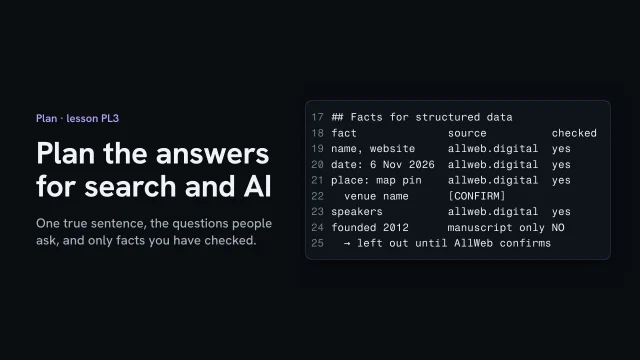 Plan the answers for search and AIPlan one true description, the questions worth answering, and only checked facts for structured data: the work SEO, AEO and GEO share.2 min video
 Check what search, maps and AI say about the businessRecord what search snippets, structured data, quotable copy and the map listing say, with the date and the fix.2 min video
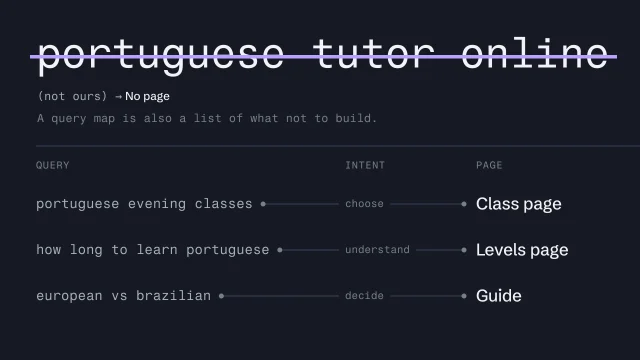 Let search intent shape the siteTurn what people search for into the pages a site needs.4 min video
 Titles, share cards and structured data from verified factsWrite titles for searchers, make share cards from the page, and mark up only facts on the claims list.2 min video